condition1combat.com Muay Thai Gym: Padwork Drills You Can Learn Fast
Muay Thai makes fast learners out of anyone willing to sweat with intention. You do not need years of experience to feel a clean jab land on the pad or to hear the heavy snap of a properly turned round kick. What you do need is a clear plan and drills that deliver results quickly. At the Condition 1 Combat Center Muay Thai gym, the focus is on practical sequences that build timing, balance, and confidence in days, not months. The padwork below comes straight from rounds that work for beginners and sharpen veterans. If you can keep your stance, breathe on impact, and listen to a few simple cues, you will make progress fast.
What makes padwork effective
Good padwork mimics a conversation. You send a message with a strike, the pad holder responds with pressure, and you answer with a counter or a reset. That back and forth trains your eyes, your feet, and your lungs at the same time. The best rounds feel almost like play, even when your heart rate touches 170.
Jab and cross mechanics come first because they govern balance. If your head and hips are under control on straight punches, you can kick without falling into your shot. Add the teep and a tight check-return pattern, and you have a working language. Everything else, like elbows, switch kicks, or knees off the catch, becomes an accent you add when the base is stable.
At the mma gym Condition 1 Combat Center, coaches pair beginners with experienced pad holders to speed up that learning curve. You will hear simple, consistent cues. Step on the jab. Turn the shoulder on the cross. Land and reload the hips for the kick. These basics never get old. Even athletes who cross-train from the boxing gym Condition 1 Combat Center are surprised by how much leg and core you need to stabilize Thai kicks while staying defensively responsible.
The five fast padwork drills that build real skill
The drills below are short, repeatable, and effective in crowded classes or private sessions. Each one can be done in 2 to 3 minute rounds, with 45 to 60 seconds of rest. If you are new, run each drill for two rounds before moving on. If you have a base, mix them in as conditioners at the end of class.
- Jab ladder with angle exit
- Dutch 4-count with kick checks
- Teep timer to switch-kick finish
- Check - counter kick - long guard reset
- Elbow crash from pad holder’s rush
How to run the jab ladder with angle exit
Start at conversational pace. The pad holder presents a left pad at head height. You step and jab. The cue is light on the first touch, stronger on the second, and full power on the third. On the fourth pad, the holder steps in as if to club you with a hook. You slip outside, step to your right 30 degrees, and answer with a jab to the new center line.
The ladder builds range awareness. Most beginners reach on the jab or overextend. A stepped jab fixes that. You stay tall, chin tucked, lead foot landing under the knee, hips leveled. The angle exit forces your feet to cooperate with your eyes. Do not drift too far or you will smother your follow-up. A clean 30 degree step usually keeps you inside kicking range, which is where you want to be for Thai-style follow ups.
Rounds: 2 to 3 rounds at 2 minutes. Reps: 5 ladders per minute. Progression: add a low kick at the end of the angle exit on every second ladder. You will feel the timing click after the first round when the pads start meeting your fist rather than chasing it.
The Dutch 4-count with kick checks
The base sequence goes jab, cross, left hook, right low kick. The pad holder gives you glove pads for the hands, then a belly-on thigh-level pad for the kick. After the kick, the holder fires a light return low kick for you to check. That check is your hinge. As soon as you set the checking foot down, run the same 4-count again.
Flow matters here. The point is not to smash each shot. The point is to keep the chain moving without breaking stance. Punch volume primes the lungs. The single kick teaches you to stabilize the leg on impact. The check keeps you honest defensively. Dutch-style combinations translate well for athletes coming from the Condition 1 Combat Center boxing gym side, since the hands carry the rhythm and the kick becomes the punctuation.
Round target: 3 rounds at 2 or 3 minutes. If you have shin guards, the check can be firmer. If not, communicate with the holder about the lightness of the return kick. On day one you should feel your calves and hips talk to you by minute five.
Teep timer to switch-kick finish
This drill grooves stance discipline and distance control. The pad holder advances at a steady walk, showing a midline target with a belly pad or a Thai pad flat to center. You teep with the lead leg, landing the ball of the foot and steering their pad off your center. The second they reset and step in again, you give a shorter teep to check their hips. On the third step, the holder sets a right-side pad for your left switch kick. You plant the teep, hop the switch, and whip the shin into the pad with the hip turned and the right shoulder pulled back.
The trick is to keep your guard high when you teep and to fall back into stance, not drift. Many new students love the teep but forget to return to a stable base. At Condition 1 Combat Center muay thai gym sessions, we count quietly on the advance. One, two, three. Kick on three. That beat lodges discover more in memory and produces explosive kicks without telegraphing.
Use 2 to 4 rounds, adjusting the distance so you are never forced to reach. If your toes are bruising, you are pushing rather than stabbing. Focus on that small surface area on the ball of the foot. If you run this drill for a week, your sparring partners will notice you can stop a charge with a single touch.
Check - counter kick - long guard reset
Real fights swing on small defensive moments. This padwork turns a defensive check into clean offense. The holder flicks a right low kick at your lead leg. You check with the shin, knee out, toes up. The second your foot returns to the floor, throw a left body kick to the pad. After impact, catch your balance in a long guard, left forearm extended, right hand stapled to your temple, and take a half step back.
The sequence teaches you to own the pocket on your terms. Too many beginners try to answer with hands after a check and get tangled. The body kick capitalizes on their open ribs while your hips are already loaded from the check. The long guard reset is insurance. If the pad holder forces a high pad for a sudden right kick, your long guard is already in place to smother it.
Run 2 minute rounds with a quick cadence: check, counter, reset. Aim for 20 to 25 clean reps in a round. You will know you are doing it right when the body kick sounds heavy while your planted foot barely slides.
Elbow crash from pad holder’s rush
Pads are not only for distance work. Muay Thai lives in the clinch. With this drill, the pad holder starts at half distance and surges forward with a high pad shield. Your job is to meet them with a tight rear elbow, then immediately frame with both hands at their biceps and step to the outside. After the frame, throw two short knees into the belly pad and break off at a 45 degree angle.
The elbow trains you to occupy the space an opponent wants. The frame teaches you not to overstay inside. The knees add scoring power while your head stays off the center line. If you are one of the athletes crossing from the Condition 1 Combat Center bjj gym into Muay Thai, this drill will feel natural. The inside control mirrors collar ties and biceps ties from no-gi, and the step-out resembles a simple angle cut you would use to avoid a re-shot in wrestling.
Two short rounds are plenty at first. Elbows chew up gas quickly when done correctly. Keep the abrasion of the pad in mind and use wraps to protect your skin.
Round structure that accelerates learning
Fast progress comes from smart pacing. A simple structure for a 45 minute pad session at condition1combat.com Muay Thai gym looks like this: 6 minute general warm-up, 6 minutes of shadow with a theme, 24 minutes of pad rounds, 6 to 9 minutes of accessory work and cool-down. Inside the pad block, use 3 rounds per focal drill or 2 rounds each for three drills. Keep rest short, 45 seconds. Short rests simulate the hum in an active fight camp without burying newer students.
The temptation is to max every shot. Do not. Spend the first 30 seconds of each round at 60 percent, push to 80 percent through the middle minute, then test a 10 second sprint in the last 20 seconds. This wave pattern mirrors how live exchanges feel: settle, solve, surge. Heart rate drops clean faster when you play with these gears rather than redline from second one.
For athletes doing mma training at Condition 1 Combat Center, padwork like this plugs into grappling and cage wrestling days without trashing your CNS. You can keep your weekly schedule balanced: two Muay Thai pad days, one boxing skill day, two grappling days. If a fight camp is on the horizon, stack one extra day of shorter, high-intent pad rounds.
Pad holding matters as much as striking
A pad holder is not a mannequin. Good holding teaches range, posture, and realistic threats. At condition1combat.com muay thai gym, beginners learn how to hold within their first week, because it speeds everyone’s development. If you are new, think of three jobs. Present the target early, meet the strike with firm pressure, and give a simple return cue so the striker must defend or angle.

Here are cues that work for most levels:
- Frame distance before each strike, not during it.
- Meet power with power, absorb only with bent elbows and engaged core.
- Add one realistic return at a time: a low kick to check, a jab to parry, or a clinch rush on the bell.
- Keep your feet alive. Step with the combination so the striker learns to hit a moving target.
- Talk. One word cues like “angle,” “check,” or “long” keep the round clean without breaking flow.
If you have a boxing background, pad pressure will feel familiar, but the angles differ. You cannot hold straight out for a round kick the way you would for a hook. Turn your shoulder, lean the pad slightly toward the incoming shin, and set your feet wider than usual. If your wrists ache, your pad angle is wrong or you are letting punches blow your elbows past your ribs.
Common mistakes that slow beginners
Fast drills work best when you avoid the usual traps. After hundreds of rounds at Condition 1 Combat Center muay thai gym, five errors pop up over and over:

- Reaching on the jab instead of stepping the lead foot first.
- Snapping the kick from the knee rather than turning the hip.
- Dropping both hands after the cross, which kills balance for the kick.
- Staring at the pad, not the holder’s chest. Eyes drift, feet drift.
- Resetting to a square stance after combinations. Square hips invite counters.
You can fix each error with one habit. Tape a line on the floor and make your lead toe land on it with every jab. Practice slow kicks with the bottom leg heavy until the hip turn feels built in. After the cross, freeze for half a second with your right shoulder still hiding your chin. Focus your eyes on the pad holder’s sternum for the whole round while tracking pads with peripheral vision. After every combination, check your heel-toe line. If both feet point at the target, you are square. Turn that rear foot 30 degrees.
Calibrating power without losing technique
Speed is not the same as hurry, and power without structure is noise. The fast padwork drills above are about timing and economy first. If the gym echoes with hard pads but your shins, wrists, and lungs are done after one round, the round did not serve you.
A practical way to calibrate: assign numbers to intensity. Light shadow is a 3 out of 10. Bag work at touch tempo is a 5. Hard pad shots with perfect form are a 7. Fight pace is 9 for short pushes. Most rounds should live at 6 to 7. Use 9 only for short finishes, no more than 10 seconds per minute. That ratio keeps technique sharp and lets you train often, which builds skill faster than a few hero rounds per week.
Coaches at the mma gym Condition 1 Combat Center will tell you the same thing in class. You cannot lift a house by yelling at it. Technique plus repeatable effort equals skill that shows up when you are tired or under pressure.
Integrating elbows, knees, and clinch safely
Beginners can and should learn elbows and knees early, but the pad holder must shape the round. Elbows need close range and a loaded shoulder. If the pad sits far away for an elbow, you will reach and roll the wrist. Have the holder wear belly pad and thick Thai pads, then crush into their space, elbow vertical or horizontal, forearm slicing through the target. Knees like a tall posture and a pointed hip. If you hump your way into the pad, you lose power and posture.
Clinch padwork deserves short rounds. Two minutes at a time is plenty for new students. Set a rule. One entry, two to three knees, one clean exit. Rack up reps. Save long clinch battles for designated clinch sessions. This approach fits well in a week that also includes brazilian jiu jitsu training at Condition 1 Combat Center. Your neck and grip will be taxed plenty in BJJ. Manage fatigue across disciplines so you keep improving without overuse issues.
A week of fast-learning padwork, mapped
If you train three days per week, use a simple rotating focus. Monday, distance and jab ladders. Wednesday, Dutch 4-count and check-counter. Friday, teep timer and elbow crash. Keep accessory work short and relevant. Calf raises for shin conditioning, Copenhagen planks for adductors, band pull-aparts for posture. The whole session should fit inside an hour. Athletes stacking mma training from condition1combat.com alongside Muay Thai can slide this structure around wrestling and grappling days.
If you train five days, add a light day with 1 minute pad intervals at 50 to 60 percent. Use it as a movement day, not a beatdown. Your nervous system learns on days when you do not overcook it. On that fifth day, review any drill where you felt clumsy. Thirty clean reps beat three sloppy hard rounds.
Coaching cues that stick
Short cues beat lectures. Here are cues we use daily at the muay thai gym condition1combat.com because they unlock common problems quickly. Step then jab. Turn the bar, not the knee, on the kick. Breathe on impact, not after. Long guard, then leave. Chin through the window on elbows. These phrases sound simple, but you can attach each to a specific body action. Ask your pad holder to repeat the cue when it applies, not every rep. The best rounds feel like guidance, not nagging.
Real-world example: a newer student from the condition1combat.com bjj gym kept tilting during switch kicks. The fix was not more reps, it was a single cue and an environmental change. We put him on a quarter-inch balance pad with the rear foot during shadow. The cue was, keep the Coke can on your head during the switch. Ten minutes later, his torso stayed level and the kick sounded like it should.
Equipment and setup make a difference
Most beginners start with 14 or 16 ounce gloves, shin guards, and a mouthpiece for partner work. For pad sessions, wrap your hands every time. Pads vary. Thai pads deal well with kicks and knees, focus mitts are great for hand speed and angle work, and belly pads save ribs. If you are holding, angle pads toward the strike to spread force. A flat-on collision sends shock into your elbows.
Space matters. In a busy class, the coach at the Condition 1 Combat Center mma gym will often mark lanes with cones or tape so pairs can move without car crashes. Learn to feel your lane. When you angle out in the jab ladder, do not drift into another pair’s space. It sounds basic, but it shapes fight IQ. The ring has corners. Your pad round should, too.
Progress markers you can trust
Skill feels vague if you do not measure it. Use three metrics for a month and you will know you are getting better. First, consistency of sound. Heavy thuds on the kick without obvious slips mean your foot placement and hip turn are matching. Second, breath timing. If you can hiss on impact and recover nose breathing within five seconds in the rest, your pacing is on track. Third, reaction to return cues. Count how many checks, parries, or angles you hit clean per round. Aim to raise that number by one per session.
On video, look for posture. If your head stays between your shoulders on the jab, you are growing. If your posting hand for the kick drifts away from your face, shorten that reach. Small changes, repeated, move the needle.
How this ties into broader training at Condition 1 Combat Center
A well-run Muay Thai program complements everything else in the room. The mma training Condition 1 Combat Center offers thrives when strikers learn to frame, build angles, and manage distance. Those same skills govern cage entries and exits. The brazilian jiu jitsu training Condition 1 Combat Center runs builds clinch awareness and posture that feed back into knees and elbows. Self defense classes at Condition 1 Combat Center borrow heavily from padwork timing. A quick teep or an angle off the line works in a parking lot as well as it does in a ring.
If you come in for a trial, you will feel that cross pollination. The condition1combat.com mma gym is not siloed. Athletes blend. A boxer learns to kick without losing hand speed. A grappler learns to frame and leave, not hug and wait. A beginner learns to hit hard with control and to breathe through a round. The gym wins when every discipline respects the others and uses padwork as a common language.
Two sample rounds stitched together
Here is how two rounds might look in real time, using the drills above. Round one, 2 minutes. Start with the jab ladder. First 30 seconds at 60 percent, then build. Hit the angle exit and add a calf kick on every second ladder. Last 20 seconds, the pad holder speeds up the entries and you keep your eyes on the chest, not the pads.
Rest 45 seconds. Walk, shake the arms, nose breathe.
Round two, 3 minutes. Teep timer to switch-kick. Walk the holder back with three teeps in a row, the third becoming a switch kick. On the minute, the holder adds a fake clinch rush. You answer with the elbow crash and two knees. Reset to the timer again. Last 15 seconds, fast teep touches at 50 percent, then one clean, heavy switch kick on the bell. If your legs are jelly and your breath stays rhythmic, you did it right.
Final notes on learning fast without shortcuts
You can compress learning time with attention and structure. That is what these padwork drills are for. They are not fancy. They ask you to show up, to listen to your feet, and to make each rep mean something. If you want to add volume, do so with intent. Ten perfect kicks after class beat fifty thrown while chatting. If you want to add difficulty, close distance or shorten cues, do not just throw harder.
At the condition1combat.com mma training sessions, new students often surprise themselves after a week. Their jab lands heavier without more effort. Their teep stops a partner cold. Their check fires on instinct. That jump comes from drilling the right things at the right pace.
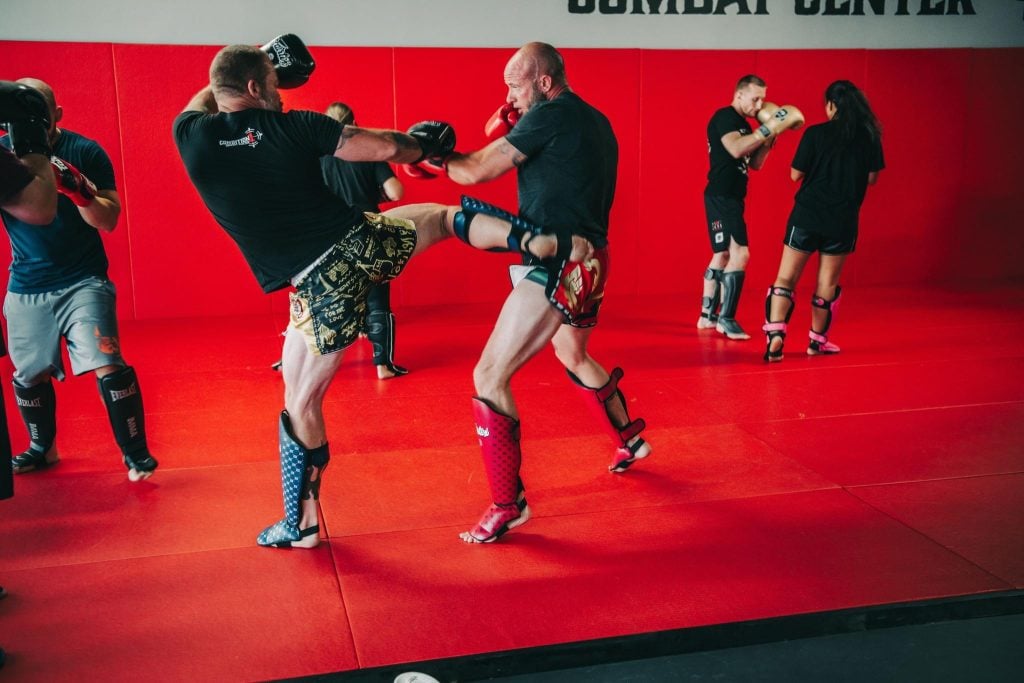
If you are nearby, drop into the Condition 1 Combat Center mma gym and ask a coach to run you through the five fast padwork drills. If you train elsewhere, take the structure with you and shape it to your room. Either way, build a habit of smart padwork. It is the backbone of Muay Thai, and it pays off every time the pads come up and you hear that first clean thud.